 InteriorPro
Gothic
Gothic Kitchen Design
Explore AI-generated Gothic kitchen designs. Upload your room photo and get photorealistic results in under 30 seconds.
Redesign my kitchen in Gothic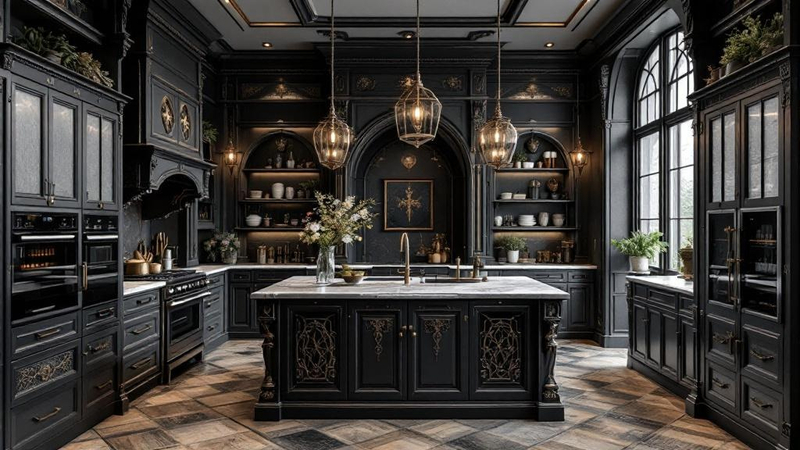
Why This Pairing Works
Why Gothic works for your kitchen
A kitchen is primarily about cooking, food preparation, and often casual dining. Gothic brings pointed arches & dramatic drapery to this space, creating an environment that feels energising and efficient. The style's emphasis on deep blacks, purples & reds pairs naturally with the kitchen's need for task-focused lighting. When it comes to durability, Gothic works here because kitchen surfaces need very high — surfaces must resist heat, moisture, staining, and heavy daily use resistance, and the style's material palette accommodates that.
Design Elements
Key elements for your Gothic kitchen
Anchor furniture
Choose a cabinetry that embodies Gothic — pointed arches & dramatic drapery. In a kitchen, this is the piece that sets the tone for everything else.
Supporting pieces
Add island or breakfast bar and countertops that reinforce the Gothic aesthetic. Look for pieces with deep blacks, purples & reds to build visual cohesion.
Colour application
Apply the Gothic palette to your kitchen using the 60-30-10 rule: dominant colour on walls and large surfaces, secondary on upholstery and textiles, accent on decorative objects and hardware.
Lighting strategy
Kitchen lighting should be task-focused. For Gothic, choose fixtures with candelabras & wrought iron to reinforce the aesthetic.
Materials & textures
Since your kitchen needs very high — surfaces must resist heat, moisture, staining, and heavy daily use durability, select materials that align with Gothic's palette — deep blacks, purples & reds — while meeting the practical demands of the space.
Finishing touches
Complete your Gothic kitchen with accessories that solve creating an efficient work triangle between sink, stove, and fridge. Consider bar stools and decorative elements that add personality without compromising the style's core principles.
Colour Palette
Gothic colours
The signature palette for Gothic spaces. Use the 60-30-10 rule: dominant colour on walls and large surfaces, secondary on furniture, accent on details.
Midnight Black
#1A1A1A
Dark Plum
#4A0E2E
Blood Red
#8B0000
Pewter
#C0C0C0
Common Questions
Gothic kitchen FAQs
What colours work best in a gothic kitchen?
A gothic kitchen typically uses deep blacks, purples & reds. Apply your chosen palette with the 60-30-10 rule: 60% dominant neutral on walls, 30% secondary shade on furniture and textiles, and 10% accent colour on decorative details. This creates a cohesive gothic feel while ensuring the space remains energising and efficient.
How do I make a gothic kitchen feel energising and efficient?
Start with the core principles of Gothic — pointed arches & dramatic drapery — and adapt them to your kitchen's specific needs. Since a kitchen is primarily used for cooking, food preparation, and often casual dining, focus on balancing aesthetics with strict functional requirements. Layer in lighting that is task-focused to set the right mood.
What furniture should I choose for a gothic kitchen?
Key pieces for a gothic kitchen include cabinetry, island or breakfast bar, countertops. Look for furniture that features pointed arches & dramatic drapery — the defining characteristic of the style. Since kitchen furniture needs very high — surfaces must resist heat, moisture, staining, and heavy daily use durability, choose materials that look the part while holding up to very high — often the busiest room in the home traffic.
Try It Yourself
See Gothic in your own kitchen
Upload a photo of your kitchen and InteriorPro's AI will redesign it in Gothic style — photorealistic results in under 30 seconds.
Redesign my kitchenExplore More
Other styles for your kitchen
Industrial
Inspired by converted warehouses and factories — exposed brick, metal ductwork, and raw concrete create an urban, utilitarian aesthetic.
→Maximalist
More is more — maximalist design embraces bold colour, pattern-on-pattern, and curated collections for rooms that tell a story.
→Brutalist
Raw, monumental, and unapologetic — brutalist interiors celebrate exposed concrete, heavy geometric forms, and an industrial material honesty.
→Dark Academia
Evoking old libraries and Gothic universities — dark wood, leather-bound books, oil paintings, and a moody, intellectual atmosphere.
→Ready to transform
your space?
Join thousands of homeowners and designers creating stunning interiors with AI.
Start designing